Behavioral science in service of the child.
Behavioral science can help children build communication, safety, independence, and access to daily life.
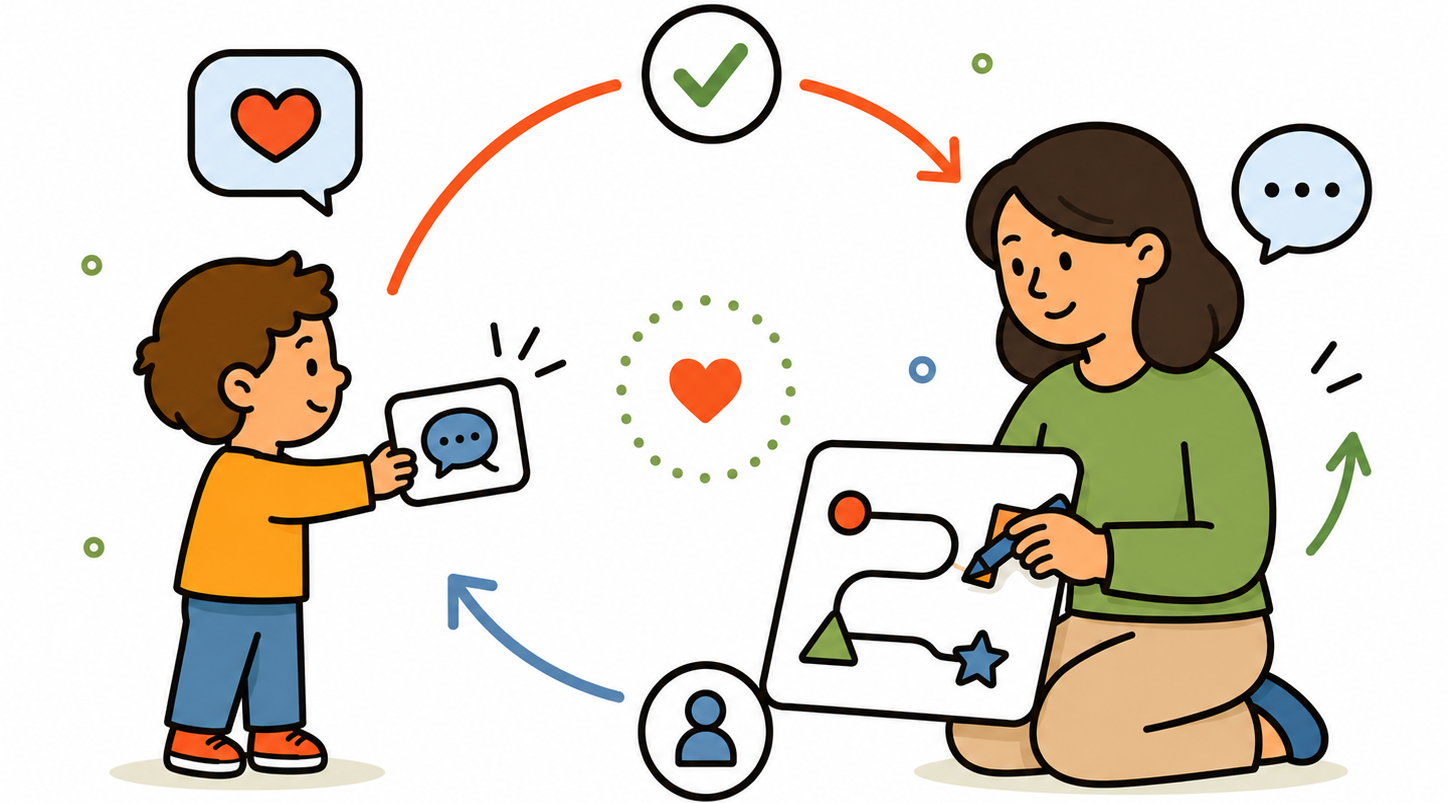
The New ABA is a training and resource project for practitioners, parents, and teams who want that work to stay child-centered, assent-aware (responsive to children's ongoing signals of consent and refusal), developmentally informed, trauma-conscious, and focused on quality of life.
This project is informed by autistic voices, families, and clinicians who have named where support must improve. Read why this standard matters.
A better standard starts with better questions.
A child slides under the table during a worksheet activity.
One note might say the child was trying to get away from something difficult or overwhelming. A clinician might label that escape-maintained behavior.
That may describe what happened on the surface. We still need to know what the child experienced. Was the task meaningful? Was the room overwhelming? Did the child understand what was being asked? Did they have a reliable way to ask for help? Did the adult miss earlier communication?
The New ABA asks a broader question:
What support would make this behavior less necessary?
That question changes the work.
It moves us toward support that builds safety, communication, autonomy, regulation, connection, participation, and joy.
Support that helps children access more life.
The goal is to help children become safer, more understood, more autonomous, more connected, and more able to participate in life as themselves.
Support should make life more accessible, not make the child less autistic.
That may include teaching communication. Building safety skills. Supporting transitions. Reducing self-injury. Expanding daily living skills. Helping a child access school, play, healthcare, family routines, and community life with more confidence and less distress.
It may also include changing the environment, adjusting adult expectations, protecting harmless autistic traits, honoring refusal, adding AAC (augmentative and alternative communication, picture systems, speech-generating devices, sign, and other tools that expand how a child can communicate), reducing unnecessary demands, and measuring outcomes beyond behavior reduction.
The New ABA keeps what is useful in behavioral science and places it in service of the child's dignity and quality of life.
Built for the people shaping autism support.
Practitioners
For BCBAs, RBTs, behavior technicians, supervisors, clinicians, and students who want practical tools for more ethical, flexible, child-centered care.
Whether you are refining your approach or building these ideas from the start, The New ABA offers language, structure, standards, and clinical tools for child-centered care.
Parents & Caregivers
For families who want to understand what respectful behavioral support can look like, what questions to ask, and how to advocate for goals that improve their child's daily life.
These resources are not designed to turn parents into technicians. The goal is to help families understand their child more clearly, respond with more confidence, and know what to ask at the next planning meeting.
Clinics & Teams
For organizations that want to build better training, supervision, culture, and accountability around autism support.
The New ABA helps teams align around one shared standard: behavioral science in service of safety, communication, autonomy, regulation, connection, participation, and quality of life.
A higher standard for behavioral science.
Behavioral science can help children. The field can keep getting better.
Raising the standard means asking better questions about goals, methods, assent, data, communication, regulation, sensory experience, development, trauma, family systems, and quality of life.
We treat behavior as information before we treat it as a target.
We teach practitioners judgment alongside procedures, and we put judgment first when they conflict.
We build support around the child. We adapt environments, routines, and expectations before we place all responsibility on the child.
The commitments that guide the work.
The New ABA is built around a small set of practical commitments. They are decision standards for real clinical choices.
-
The child is a person now.
Every goal, method, and measurement should protect the child's dignity now and support their future.
-
Autism is part of who the child is.
We protect how autistic children move, play, sense, communicate, and relate unless there is a clear, child-centered reason to adapt.
-
Behavior is information before it is a target.
Before changing behavior, we ask what it may be communicating, protecting, expressing, or revealing.
-
Assent is clinical data.
A child's yes, no, hesitation, avoidance, distress, and withdrawal should shape the intervention in real time.
-
Communication is a right.
Every child deserves reliable ways to express needs, preferences, refusal, pain, confusion, and choice.
-
Regulation comes before instruction.
A child who is overwhelmed, unsafe, or dysregulated needs support before more is asked of them.
-
Skills should expand freedom.
We teach skills because they increase safety, autonomy, access, connection, comfort, participation, or joy.
-
The environment is part of the intervention.
We change contexts, routines, expectations, and adult behavior before placing all responsibility on the child.
-
Data must serve dignity.
We measure distress, recovery, communication, autonomy, trust, access, and quality of life. We include behavior data when it matters.
-
Judgment guides protocol.
Procedures support practice. Clinical judgment decides when, whether, and how they should be used.
A shift in what we notice, value, and measure.
The New ABA begins with better questions:
- What is this child communicating?
- What support is missing?
- What makes this moment hard?
- What would help the child participate safely?
- Is this goal meaningful for the child?
- Does the child have a reliable way to say no, stop, help, break, or all done?
- Are we measuring what matters?
- What would improve this child's quality of life?
Those questions lead to different practice.
We build toward participation
Children may need support following adult direction, especially around safety and necessary care. The broader goal is supported participation built through communication, trust, regulation, and shared understanding.
We build toward behavior understanding
Behavior gives us information. It may point to communication, pain, sensory overload, confusion, anxiety, fatigue, joy, skill gaps, or environmental mismatch. Understanding comes before intervention.
We build toward child-centered goals
A goal should have a clear child-centered reason. It should improve safety, communication, autonomy, access, comfort, health, connection, participation, or quality of life.
We build toward clinical judgment
Protocols can support good practice. Judgment guides it. Skilled practitioners know how to implement a plan and how to pause, adapt, collaborate, repair, or reconsider when the child's communication tells us something important.
Tools for better practice.
Practical resources for families, clinicians, and teams who want to bring these ideas into daily practice.
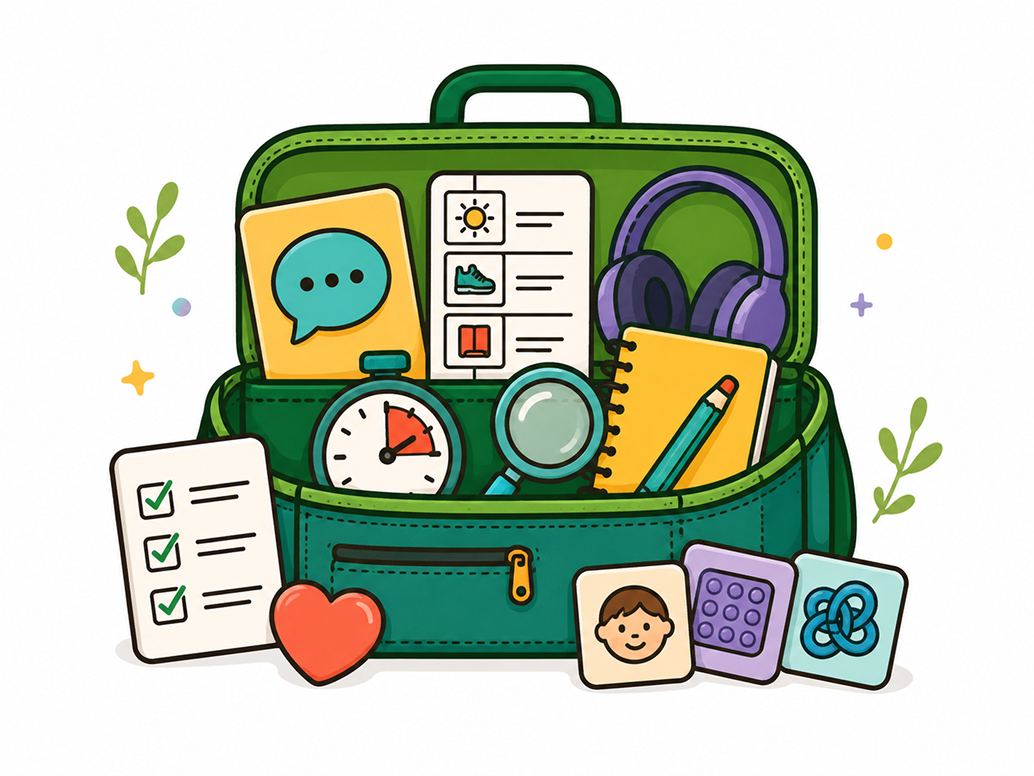
Goal selection tools
Decision guides for choosing goals that support safety, autonomy, communication, access, comfort, participation, and quality of life.
Assent & refusal tools
Checklists and examples to help practitioners notice assent, assent withdrawal, refusal, hesitation, distress, shutdown, and repair opportunities.
Behavior-as-information templates
Worksheets for understanding what behavior may be communicating, protecting, expressing, or revealing before choosing an intervention.
Data that serves dignity
Measurement tools that include distress, recovery, communication, autonomy, participation, trust, and quality of life alongside traditional behavior data.
Parent & caregiver guides
Plain-language resources to help families understand therapy goals, ask better questions, and advocate for respectful support.
Team implementation materials
Rubrics, supervision prompts, discussion guides, and training materials for clinics and school-based teams.
Ideas in motion.
Essays on assent-aware practice, the RBT path, and putting behavioral science in service of the child.
A free RBT training course is in development.
The first course, Foundations of The New ABA, will align with the BACB RBT Task List (3rd ed.) and deliver a Certificate of Completion. It is designed for practitioners and teams who want behavioral science to serve the child's safety, communication, autonomy, and quality of life. Nine foundational modules. Built around the Core Tenets.
The work begins with a different promise.
We will listen for what silence may mean: overwhelm, shutdown, assent withdrawal, or recovery.
We will treat assent, refusal, hesitation, and distress as clinical data that shapes the plan.
We will measure progress by safety, access, communication, autonomy, connection, and quality of life.
We will use data to see more of what matters in the child's life.
We will use behavioral science carefully, humbly, practically, and ethically.
In service of safety, communication, autonomy, regulation, connection, dignity, and quality of life.
Help shape The New ABA.
Join the early list for The New ABA. We'll notify you when the course is ready, and keep you posted along the way as the manifesto, core tenets, and resource library take shape. Written for practitioners, parents, and teams who want a higher standard for autism support.
Grounded in evidence, guided by humility.
The New ABA draws on behavioral science, developmental research, autism intervention, AAC, sensory processing, trauma-informed care, neurodiversity perspectives, parent experience, and autistic-led research, advocacy, and lived experience.
The aim is to use that science more carefully. Good support is evidence-informed, developmentally appropriate, and ethically grounded. It stays responsive to the child's communication and open to revision when the child's experience tells us something important.
Frequently asked questions
How does The New ABA relate to behavioral science?
The New ABA starts from the belief that behavioral science can help children build meaningful skills and access more of life. This project is about raising the standard for how that help is defined, measured, and delivered, with the child's safety, communication, autonomy, and quality of life at the center.
It also takes seriously the times when therapy has centered compliance, normalization, or adult convenience over the child's experience. The manifesto names that record honestly and builds from it.
Is this only for BCBAs and RBTs?
No. The New ABA is for anyone who supports autistic children, practitioners, parents, caregivers, clinics, educators, and interdisciplinary teams. Some resources will be more clinical. Others are written in plain language for families and advocates.
BCBA (Board Certified Behavior Analyst) and RBT (Registered Behavior Technician) are BACB-issued credentials for behavior analysts and behavior technicians respectively.
Does this mean children should never be asked to do hard things?
No. Children often need support with hard things: hygiene, transitions, medical care, communication, safety, school routines, and daily living skills.
The New ABA focuses on how those skills are chosen and taught. Difficulty should be supported with care, clarity, regulation, communication, and respect for the child's signals.
What does "assent-aware" mean?
Assent-aware practice means the child's communication matters throughout therapy, even when legal consent comes from a parent or guardian.
A child's refusal, hesitation, avoidance, distress, shutdown, or engagement gives clinicians important information. When safe and clinically appropriate, that information should shape what happens next.
Does The New ABA reject data?
No. Data can be valuable. The New ABA asks us to measure more of what matters.
Behavior reduction may be one data point. It is not the whole picture. Good data can also help us understand communication, distress, recovery, autonomy, trust, participation, and quality of life.
Is this neurodiversity-affirming?
Yes. The New ABA treats autistic ways of moving, sensing, communicating, playing, and relating as meaningful parts of a child's life.
Support may still be needed. Skills may still be taught. Safety may still require intervention. Goals should be chosen for clear child-centered reasons that improve the child's daily life.
When will the course be available?
The first course is in development. Join the early access list to receive updates and preview materials as they become available.